Discover NiMind, the leading privacy first mental health platform using digital phenotyping and passive sensing to build digital resilience through zero-effort behavioral insights.
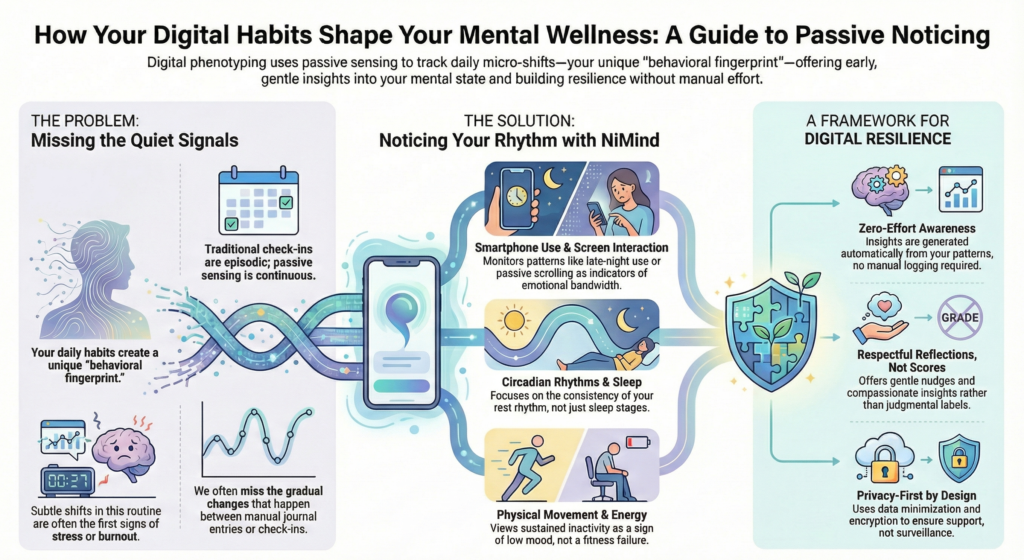
Most of us are creatures of habit, yet we rarely perceive the subtle “temporal map” of our behaviors. In the field of digital phenotyping, research shows that it isn’t just major life events that dictate our mental health; it is the micro shifts in our daily routines our sleep rhythms, screen interactions, and movement patterns that serve as the earliest indicators of our well being.
At NiMind, we utilize passive sensing technology to help you bridge the gap between “going through the motions” and true self awareness. By reflecting on behavioral trends privately and securely, we empower you to notice shifts before they become overwhelming.
1. Smartphone Use and Mental Health Indicators
When emotional bandwidth decreases, our screen interaction patterns are often the first to shift. In 2025, search intent for “digital wellness” has moved beyond “screen time” to “intent-based engagement.”
You may notice:
- Delayed Sleep Onset: Using your device late into the night.
- Checking Frequency: Repeatedly unlocking your screen without a specific task.
- Passive Consumption: Spending extended time on apps without a sense of satisfaction.
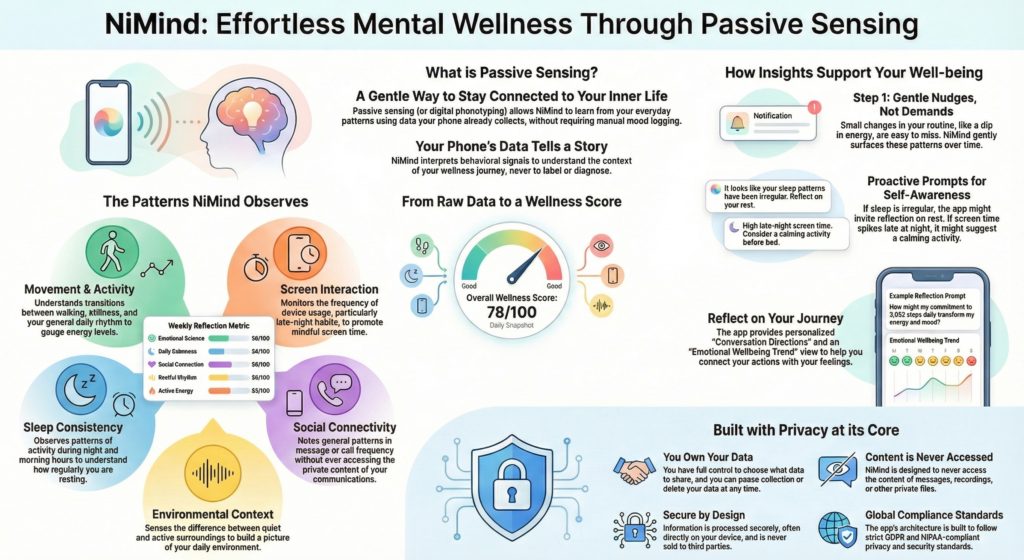
How NiMind Helps: Rather than just “tracking time,” NiMind identifies the context. If your late-night usage spikes, NiMind provides a gentle, personalized nudge: “You’ve been active later than usual. Would a wind-down exercise help you reset?”
2. Circadian Rhythms and Emotional Resilience
Consistent sleep-wake patterns are foundational to emotional regulation. Unlike traditional fitness trackers that focus on sleep “stages,” NiMind focuses on your rest rhythm.
Key patterns to observe:
- Social Jetlag: Significant differences between weekday and weekend routines.
- Rest Variability: Shifting bedtimes that disrupt your internal clock.
How NiMind Helps: By observing when activity naturally slows down, NiMind helps you visualize your rhythm. It encourages “digital resilience” by suggesting a return to your baseline when your patterns become irregular.
3. Physical Movement as a Behavioral Biomarker
In digital health research, location entropy and general movement are recognized as “passive data” that mirror energy levels. Sustained inactivity, especially when it deviates from your norm, can be a signal of low mood or social withdrawal.
The NiMind Approach: It isn’t about “counting steps” for fitness. It’s about recognizing disconnection. If you’ve experienced several low-activity days, NiMind might suggest: “A short walk today could refresh your perspective.”
4. Identifying Shifts in Your “Temporal Map”
Everyone has a unique “behavioral fingerprint.” Significant changes in your usual active hours or your physical environment are often early signs of stress or burnout.
NiMind monitors these shifts in routine without judgment:
- Changes in your peak productivity hours.
- Extended periods in a single environment.
- Shifts in the frequency of your social interactions.
5. The Science of Passive Noticing: Why it Matters
The transition from episodic, self-reported check-ins to continuous wellness monitoring is the future of mental healthcare.
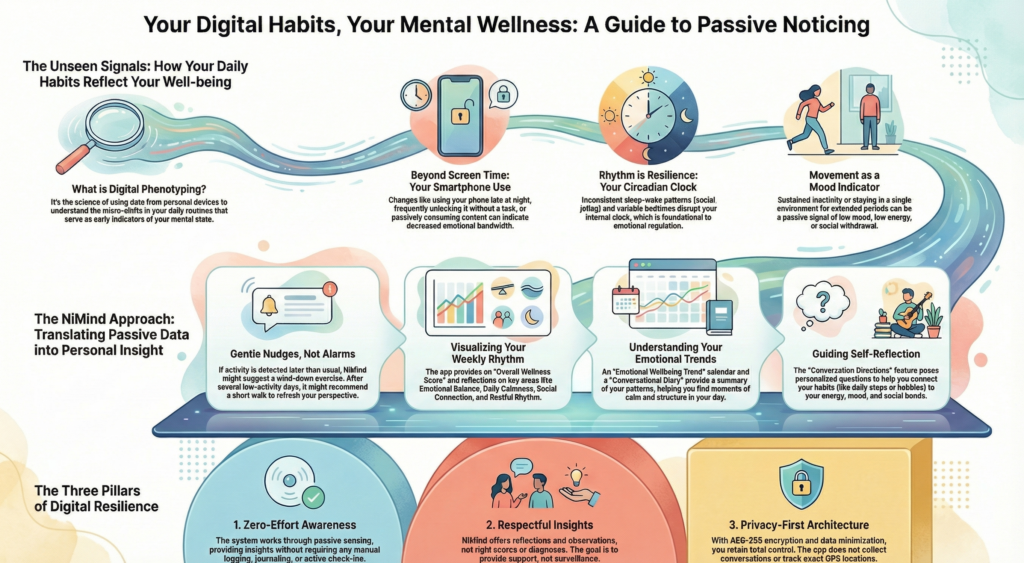
NiMind provides a three-pillar framework for digital resilience:
- Zero-Effort Awareness: No manual logging or journaling is required.
- Respectful Insights: We provide reflections, not “scores” or labels.
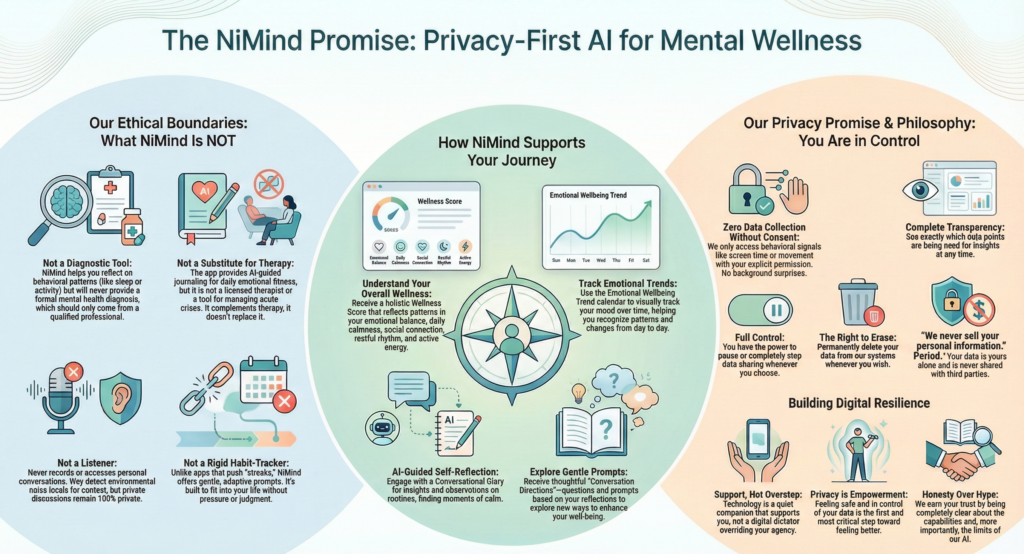
- Privacy-First Architecture: Using AES-256 encryption and data minimization, you retain total control over your sensing data.
Why Choose a Privacy First Mental Wellness App?
Many users ask: “Is my phone watching me?” At NiMind, we believe in support, not surveillance. We do not collect conversations, track exact GPS locations, or claim to “diagnose” your feelings.
Instead, we identify rhythm changes the subtle shifts in screen engagement and movement consistency and translate them into actionable, compassionate nudges.
Start noticing what matters. Quietly, respectfully, and on your terms.
NiMind: Reflecting your rhythm, supporting your wellness.
FAQs (Frequently Asked Questions)
What is digital phenotyping in mental health? Digital phenotyping is the moment-by-moment quantification of an individual’s behavioral patterns such as sleep rhythms, physical movement, and smartphone interaction using passive sensor data from everyday devices. NiMind uses these digital biomarkers to identify early shifts in wellness without requiring manual user input.
How does NiMind use passive sensing for wellness? NiMind utilizes continuous monitoring via Android and iOS APIs (such as Google Fit and HealthKit) to create a “temporal map” of user behavior. By observing subtle changes in screen engagement, movement consistency, and environmental cues, the platform provides personalized, gentle nudges to support proactive self-care.
Is my data private when using NiMind? Yes. NiMind is built on a privacy-first architecture that views data security as a primary competitive advantage. The platform employs technical safeguards such as AES-256 encryption, data minimization, and transparent consent workflows to ensure users retain total control over their behavioral sensing data.
What are behavioral biomarkers? Behavioral biomarkers are objective digital traces like location entropy, step counts, and app usage patterns that serve as indicators of mental state. NiMind translates these raw sensor streams into clinical context to help users recognize patterns that may lead to burnout or emotional distress.