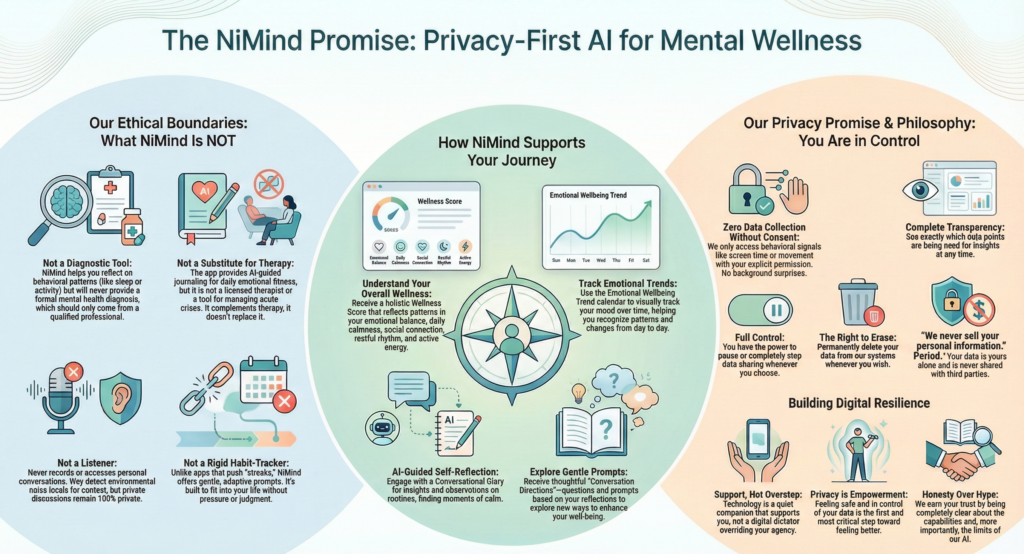
Experience proactive mental wellness with NiMind. Our privacy-first app uses ethical digital phenotyping to help you recognize behavioral patterns without recording private conversations. Redefine your self-awareness today.
In a digital landscape where wellness apps often overpromise positioning themselves as your therapist, doctor, and best friend all at once it’s easy to feel a sense of “app fatigue” or skepticism. When it involves your mental well-being and sensor data, transparency is the only foundation for trust.
At NiMind, we believe that responsible AI in mental health starts with clear boundaries. Being honest about what we don’t do is just as vital as explaining our features. Here is an honest look at the clinical and ethical boundaries we’ve built into NiMind to support your journey.
1. NiMind Does Not Provide a Mental Health Diagnosis
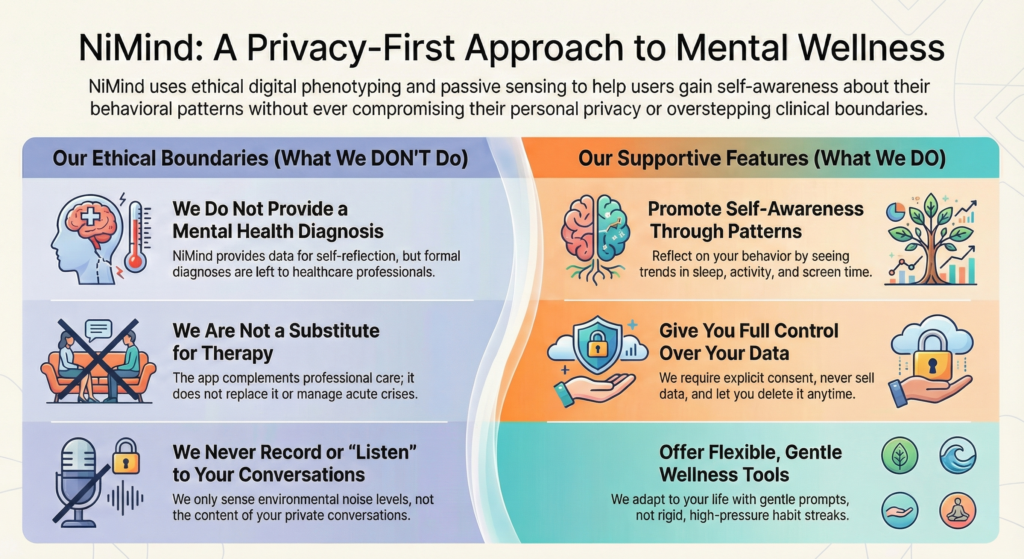
Many users ask, “Can an app diagnose depression?” At NiMind, the answer is a firm no. NiMind is not a diagnostic tool. While the app utilizes passive sensing to help you reflect on behavioral patterns such as changes in your sleep rhythm or physical activity levels it does not label or categorize your emotional state in clinical terms.
Why this matters: We believe a formal mental health diagnosis should only come from a qualified healthcare professional. NiMind provides the data for self reflection, but we leave the medical conclusions to the experts.
2. We Are Not a Substitute for Therapy or Crisis Support
While NiMind offers AI-guided journaling and mood reflections rooted in wellness practices like mindfulness, it is not a licensed therapist. Our conversational experiences are designed for daily emotional fitness, not for treating clinical disorders or managing acute crises.
- Note: If you are experiencing intense emotional distress, please reach out to a licensed clinician or a local crisis hotline. NiMind is a complement to therapy, not a replacement.
3. We Never Record or “Listen” to Your Conversations
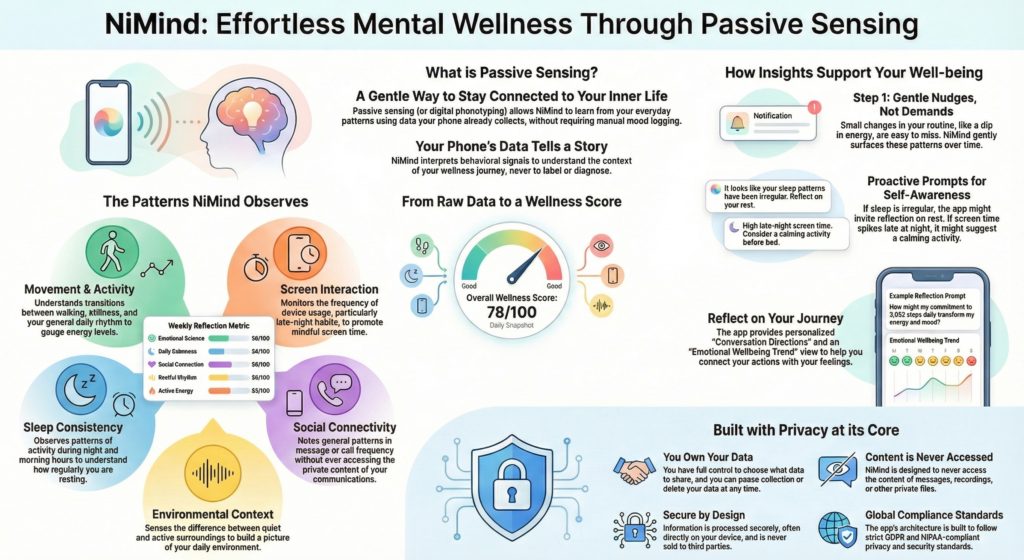
One of the biggest concerns with mobile health sensing is audio privacy. While NiMind can interpret environmental indicators like whether you are in a quiet or loud space to provide context for your mood, we do not access, record, or store any personal audio.
Your private conversations, voice notes, and ambient talk remain 100% private. We detect “noise levels” as a data point for your environment, but we never transcribe or “listen” to what is actually being said.
4. Zero Data Collection Without Explicit Consent
There are no “background surprises” with NiMind. Whether it’s screen interaction trends, movement variability, or app usage patterns, we only access behavioral signals with your explicit permission.
In alignment with GDPR and HIPAA-best practices, you are always in the driver’s seat:
- Transparency: See exactly which data points are being used.
- Control: Pause or stop data sharing at any time.
- Right to Erase: Delete your data permanently whenever you choose.
- No Third Parties: We never sell your personal information. Period.
5. We Don’t Believe in “One Size Fits All” Wellness
The 2025 wellness market is flooded with rigid, high-pressure habit trackers. NiMind takes a different approach. We don’t push “streaks” or assume that a specific routine works for everyone. Instead, we offer gentle prompts and reflective tools that adapt to your unique life context.
Whether you check in once a day or once a week, NiMind is built to fit into your life—not to take it over.
Why These Boundaries Define Digital Resilience
We built NiMind on the principle of “Digital Resilience.” This means creating technology that supports human agency rather than overriding it. We believe:
- Support, Not Overstep: Technology should be a quiet companion, not a digital dictator.
- Privacy is Empowerment: Feeling safe with your data is the first step toward feeling better.
- Honesty Over Hype: Trust is earned by being clear about the limits of AI.
By staying within these boundaries, NiMind remains a safe, respectful, and supportive tool for increasing self-awareness. We help you recognize patterns and build helpful habits on your own terms—without pressure, judgment, or overreach.
Explore NiMind: Thoughtfully limited. Exceptionally supportive. Wellness, redefined—with respect at the center.
FAQs (Frequently Asked Questions)
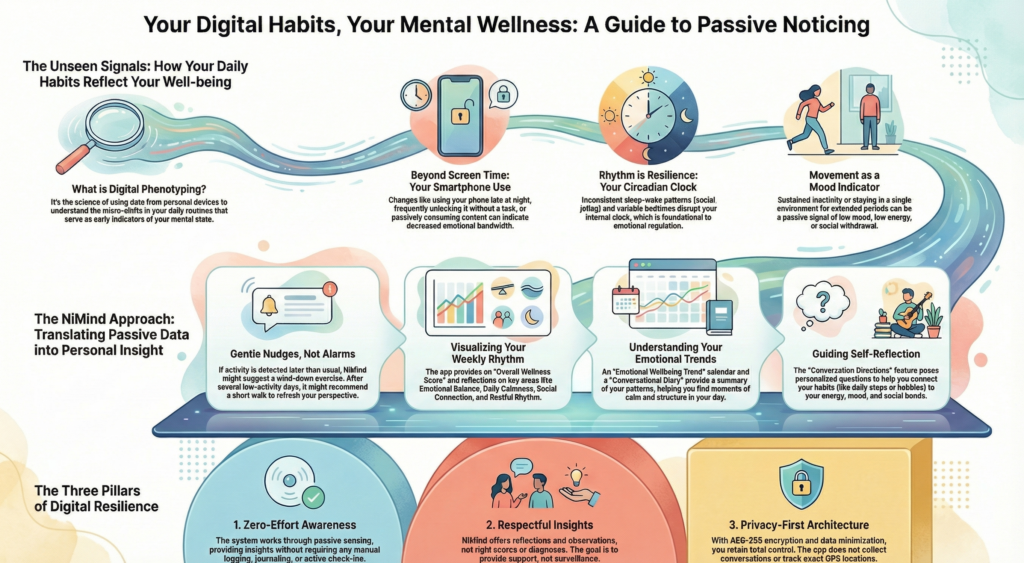
1. What is NiMind? NiMind is an advanced mental wellness application that leverages passive sensing technology (digital phenotyping) to support proactive emotional care. Unlike traditional mood trackers that require manual logging, NiMind works in the background to interpret subtle behavioral signals from your device.
2. How does passive sensing work in NiMind? Passive sensing allows the app to collect data without user intervention. With your permission, NiMind observes daily patterns such as movement, sleep consistency, screen interaction, and environmental activity to create a “temporal map” of your well being.
3. Is my data safe with NiMind? Yes. NiMind is built with a privacy-first architecture. It utilizes end to end encryption and follows global regulatory standards like GDPR and HIPAA. Behavioral data is often processed directly on your device, and private content like messages or recordings are never accessed.
4. Can NiMind diagnose mental health conditions? No. NiMind is designed for monitoring and self-awareness, not for clinical diagnosis. It provides context to your daily rhythm such as identifying shifts in sleep or activity to help you make informed choices about your wellness.