You don’t need a £300 smartwatch to understand how well you’re sleeping. Research increasingly shows that smartphone-based passive monitoring can measure sleep quality as accurately as wrist-worn devices — and in some contexts, more accurately. Here’s exactly how to do it without strapping anything to your wrist.
In this article
- Why sleep quality matters more than sleep quantity
- How smartphones passively detect sleep stages
- The best wearable-free sleep tracking methods
- Building your personal sleep baseline
Why Sleep Quality Matters More Than Sleep Quantity
Eight hours of fragmented, shallow sleep leaves you more cognitively impaired than six hours of consolidated, deep sleep. Yet most people track only one number: total hours slept. Sleep quality — the architecture of your sleep, including how much time you spend in deep (slow-wave) and REM sleep — is the metric that actually predicts next-day cognitive performance, mood regulation, and immune function.
The challenge has always been that measuring sleep quality traditionally required polysomnography (PSG) in a sleep lab, or at minimum a consumer-grade wrist accelerometer. Both have significant limitations: PSGs are expensive and artificial, while wrist trackers are uncomfortable for many people and require nightly charging.
“The best sleep tracker is the one you actually use every night. For most people, that’s their smartphone — already on the bedside table, already charged.”
How Smartphones Passively Detect Sleep
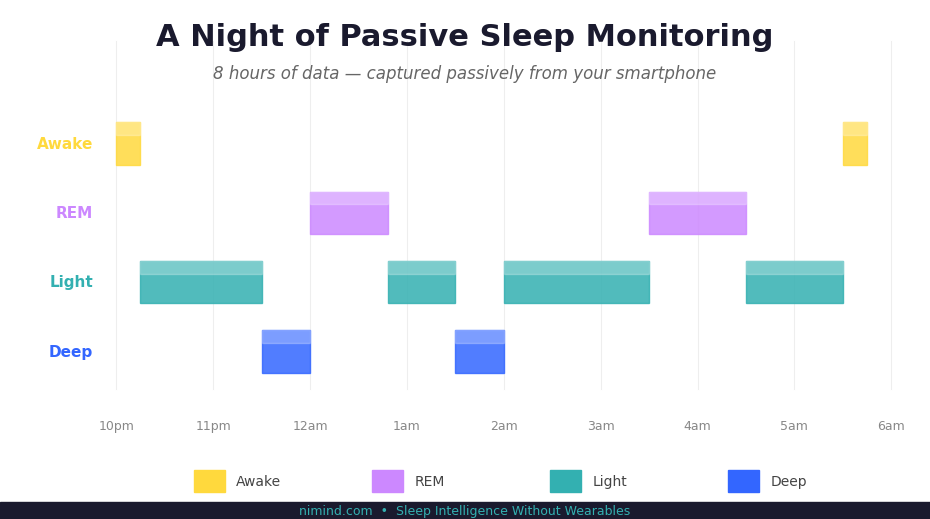
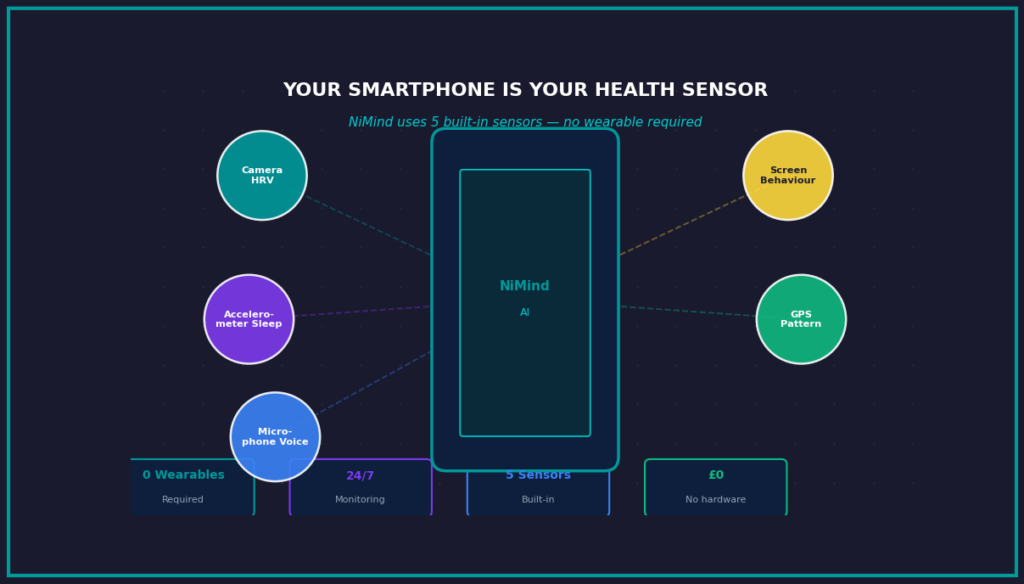
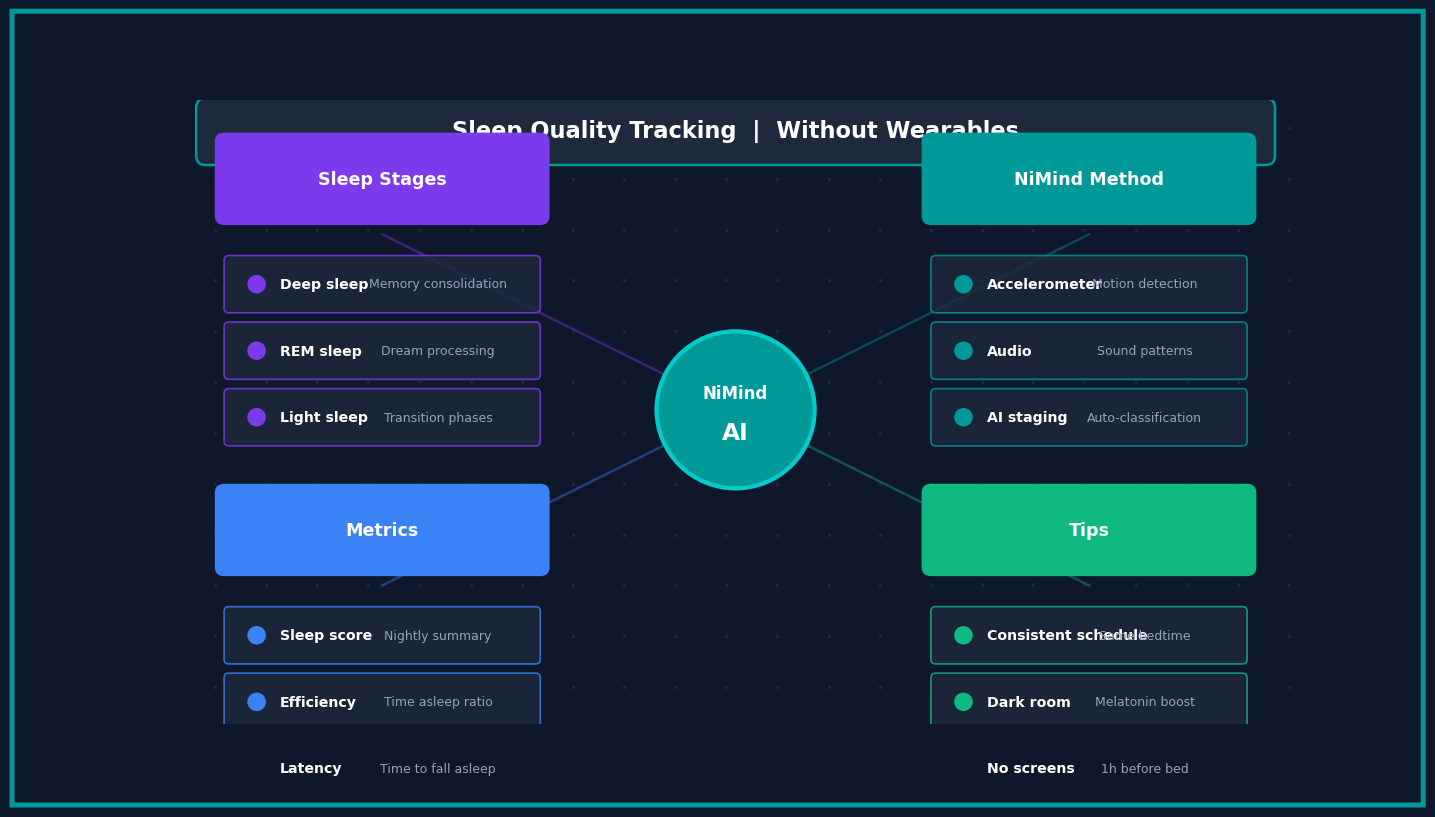
Modern smartphones contain multiple sensors that, when analysed together, reveal a great deal about your sleep patterns. The key sensors are the accelerometer (detects movement), the microphone (detects breathing rate, snoring, and ambient noise), and the barometer and light sensor (detects environmental changes). Some apps also analyse your phone interaction patterns — when you last picked it up, when you first check it in the morning — to infer sleep window timing.
The signals that matter
- Movement detection: Accelerometer data distinguishes restless sleep (frequent movement) from consolidated sleep, and can identify wake periods
- Breathing rate estimation: Microphone analysis during sleep can estimate respiratory rate, which changes across sleep stages
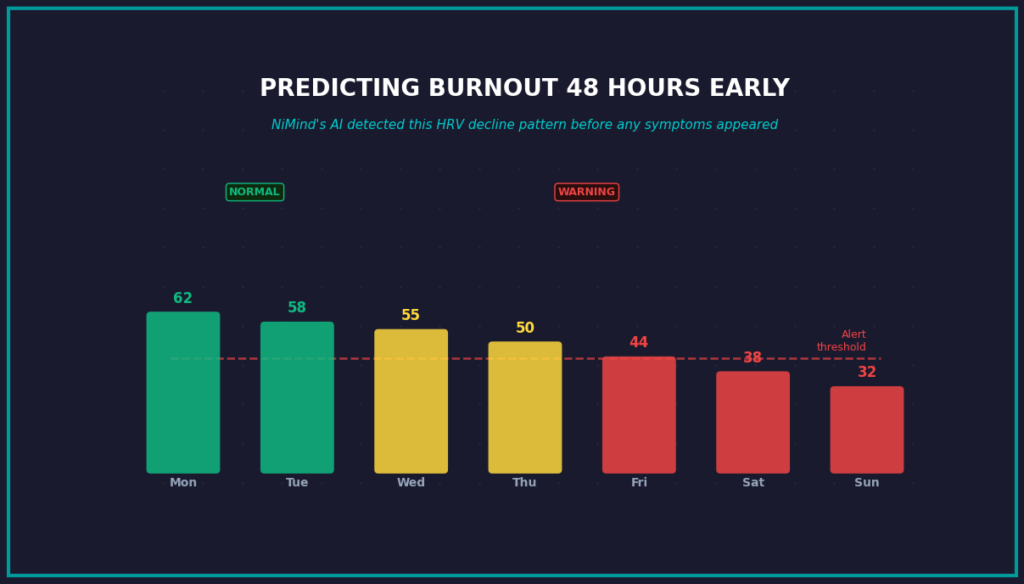
- Heart rate via camera PPG: Some apps ask you to briefly place your finger on the camera lens before sleep and on waking to capture HRV and resting heart rate
- Screen-off timing: When you stop interacting with your phone correlates strongly with sleep onset time
- Morning behaviour patterns: How quickly you respond to your alarm, your first app interaction, and screen brightness preferences on waking reflect sleep quality
The Best Wearable-Free Sleep Tracking Methods
Several validated approaches to phone-based sleep tracking have emerged from academic research and are now available in consumer applications. The most effective combine multiple signal types rather than relying on any single sensor.
Passive overnight microphone analysis, combined with accelerometer data, can classify sleep stages with accuracy approaching 80% compared to PSG gold standards in published research — comparable to many consumer wrist trackers. The key advantage is zero additional hardware: your phone, placed face-down on the bedside table, does the work automatically.
Voice-based morning check-ins are another powerful tool. A 30-second voice recording on waking can reveal vocal biomarkers of sleep quality — specifically, acoustic features that correlate with slow-wave sleep duration and subjective sleep satisfaction scores in clinical studies.
Building Your Personal Sleep Baseline
Single-night data is almost meaningless. Sleep quality varies enormously night to night based on stress, alcohol consumption, meal timing, exercise, and dozens of other factors. What you need is a rolling baseline — typically 14 to 30 days of data — from which you can identify your personal patterns and flag genuine deviations.
Once you have a baseline, the truly useful insights emerge: which nights consistently produce your best sleep, what activities correlate with worse sleep quality, how your sleep architecture changes during high-stress periods, and whether specific interventions (earlier dinner, shorter screen time, later exercise) actually improve your sleep metrics.
The Bottom Line
Tracking sleep quality without a wearable is not only possible — it’s increasingly the smarter choice. Smartphone-based passive monitoring removes friction, improves adherence, and delivers longitudinal data that is more useful than isolated wearable readings. The key is using an app that combines multiple passive signals and builds personalised baselines over time.
Track Your Sleep Quality Passively
NiMind monitors sleep patterns, HRV, and recovery using just your smartphone. No wearable needed. Free to try.
- What Is Passive HRV Monitoring — And Why It Beats Wearables
- What Is HRV? A Plain-English Guide to Heart Rate Variability
Related reading: Passive health tracking from your smartphone · 5 wellness signals your phone collects