Heart rate variability (HRV) might be the most important health metric most people have never heard of. Used by elite athletes, military performance researchers, and psychiatrists alike, HRV provides a window into the autonomic nervous system that no other non-invasive measurement can match. Here’s everything you need to know — in plain English, without the jargon.
In this article
- What HRV actually is
- What HRV measures about your body
- What good and bad HRV looks like
- How to track your HRV and use the data
What HRV Actually Is
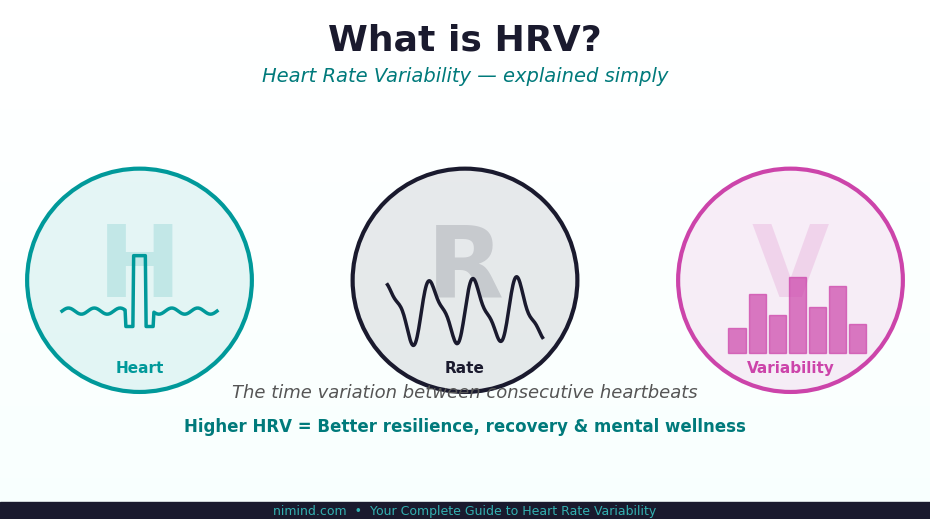
Your heart doesn’t beat with the regularity of a metronome. Even at rest, the time between successive heartbeats varies — sometimes by milliseconds, sometimes by more. If your heart rate is 60 beats per minute, the gaps between beats aren’t all exactly 1,000 milliseconds; they might be 980ms, then 1,020ms, then 1,005ms, then 990ms. Heart rate variability is simply the measurement of these millisecond variations over time.
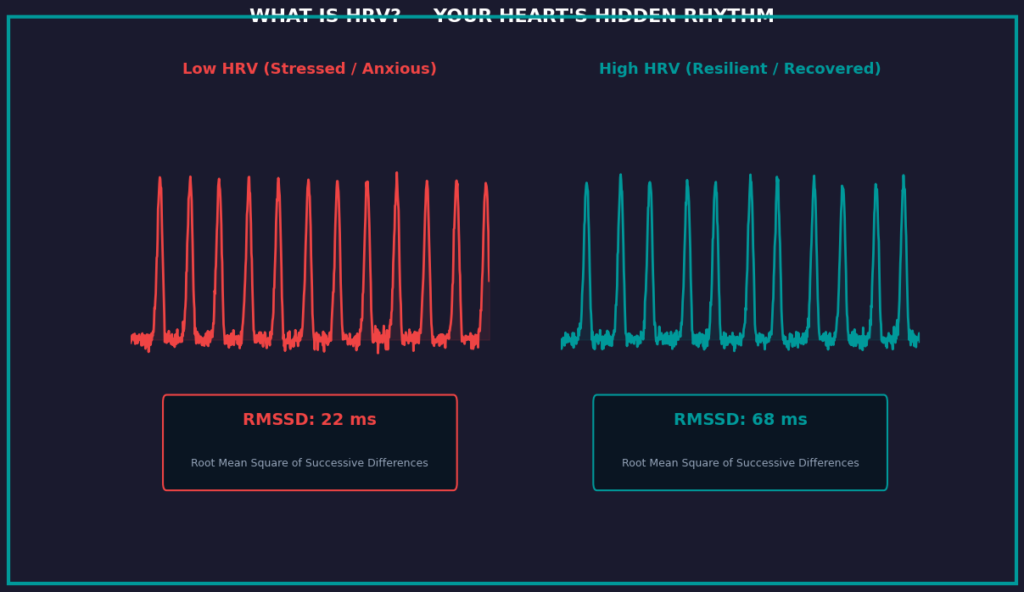
The key metric most apps and devices report is RMSSD: the Root Mean Square of Successive Differences, which reflects short-term variations and is closely linked to parasympathetic nervous system activity. A higher RMSSD generally means your nervous system is in a balanced, well-regulated state. A lower RMSSD suggests your body is under physiological stress — whether from exercise, psychological pressure, illness, poor sleep, or overtraining.
“HRV is the body’s internal readiness score. It tells you — with more accuracy than any subjective feeling — how well your nervous system recovered overnight and how much physiological reserve you’re carrying into today.”
What HRV Measures About Your Body
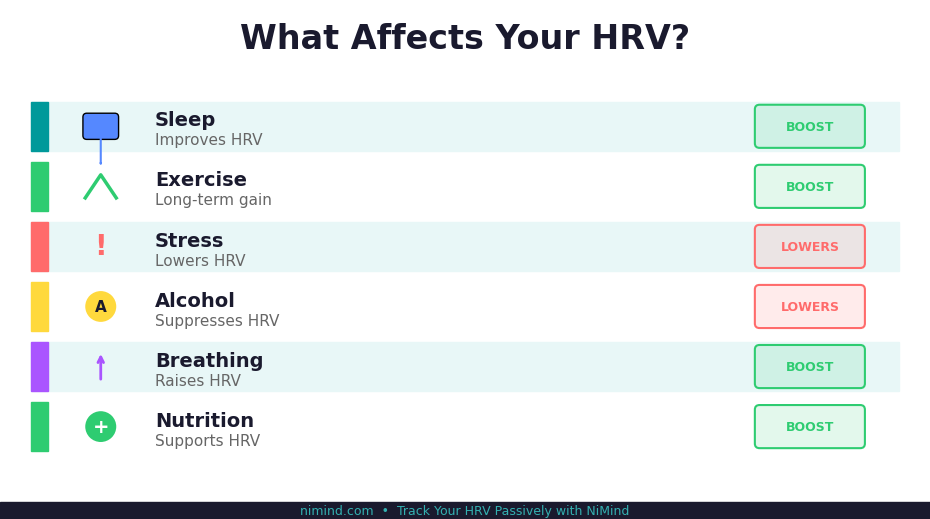
HRV doesn’t directly measure stress, anxiety, sleep quality, or fitness. What it measures is the state of your autonomic nervous system — the part of your nervous system that controls involuntary functions like heart rate, digestion, and breathing. The autonomic system has two branches: the sympathetic (fight-or-flight) and the parasympathetic (rest-and-digest). HRV reflects the balance between these two systems.
When your parasympathetic system dominates — typically when you’re rested, calm, and well-recovered — your heart’s rate is modulated by respiratory cycles and other internal rhythms, producing higher variability. When your sympathetic system dominates — during stress, illness, sleep deprivation, or physical exertion — the heart is driven toward a more regular, metronomic rate, reducing variability. This is why HRV is such a sensitive proxy for everything from cardiovascular fitness to psychological burnout: it all flows through the autonomic nervous system.
What drives HRV up and down
- Increases HRV: Quality sleep, aerobic fitness, parasympathetic breathing practices, low psychological stress, adequate hydration, stable blood sugar
- Decreases HRV: Poor sleep, illness, alcohol consumption, psychological stress, overtraining, high caffeine intake, emotional suppression, chronic anxiety
What Good and Bad HRV Looks Like
HRV is highly individual. A single absolute number is nearly meaningless without the context of your personal baseline. A 35ms RMSSD might be exceptional for a 55-year-old under significant life stress, and concerning for a 25-year-old endurance athlete. Age, fitness level, sex, circadian phase, and dozens of other factors influence absolute HRV values. This is why the most meaningful HRV tracking focuses on personal trends rather than population comparisons.
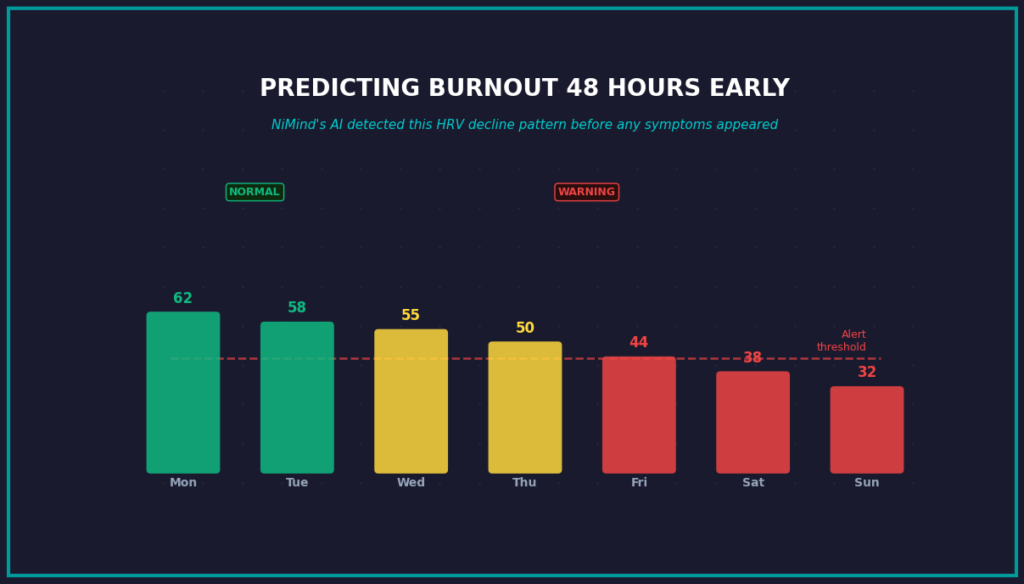
As rough age-adjusted benchmarks: RMSSD above 50ms is generally associated with good autonomic regulation in adults under 50. Below 20ms is associated with elevated stress, poor recovery, or clinical autonomic dysfunction. But within a personal tracking context, what matters most is direction — is your HRV trending up, down, or stable over the past 14–30 days? A 10% downward trend sustained over two weeks is a meaningful signal regardless of absolute value.
How to Track Your HRV and Use the Data
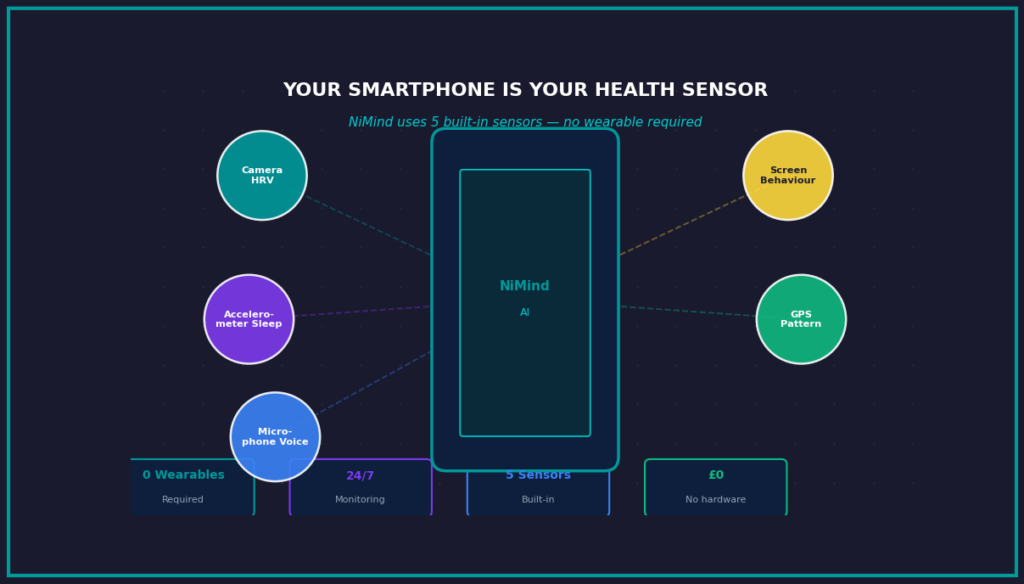
HRV can be tracked with ECG-based devices (most accurate), photoplethysmography (PPG) wrist wearables like Apple Watch and Garmin (good accuracy for trends), and increasingly via smartphone camera-based PPG and passive overnight analysis (growing accuracy, zero hardware cost). Morning HRV measurements — taken within 30 minutes of waking, before coffee or significant movement — provide the most stable daily readiness indicator.
The most valuable HRV insights come from trends, not individual readings. Establish a 14–30 day baseline, then monitor for systematic changes that correlate with lifestyle factors. This turns HRV from an interesting number into an actionable early-warning system for stress accumulation, overtraining, and burnout.
The Bottom Line
HRV is not just for athletes. It is one of the most sensitive, non-invasive windows into your physiological and psychological state available — and the technology to track it is now available on the smartphone in your pocket. Understanding your HRV is one of the highest-use investments you can make in your long-term mental and physical wellness.
Start Tracking Your HRV Today — No Wearable Needed
NiMind monitors your HRV and wellness passively using just your smartphone. Build your personal baseline and understand your body like never before. Free to start.
- HRV and Anxiety: What Heart Rate Variability Tells You About Your Stress
- What Is Passive HRV Monitoring — And Why It Beats Wearables
Related reading: HRV and anxiety: what it reveals about stress · Passive HRV monitoring vs. wearables