If you’ve ever felt your heart race before a stressful presentation, noticed your chest tighten during a conflict, or felt physically drained after a week of high anxiety — you’ve experienced what heart rate variability research has been quantifying for decades. HRV is one of the most sensitive physiological measures of stress and anxiety available, and understanding it can fundamentally change how you manage your mental wellness.
In this article
- The HRV-anxiety connection explained
- What low HRV means for your stress levels
- How HRV changes during anxiety episodes
- Using HRV data to manage anxiety more effectively
The HRV-Anxiety Connection Explained
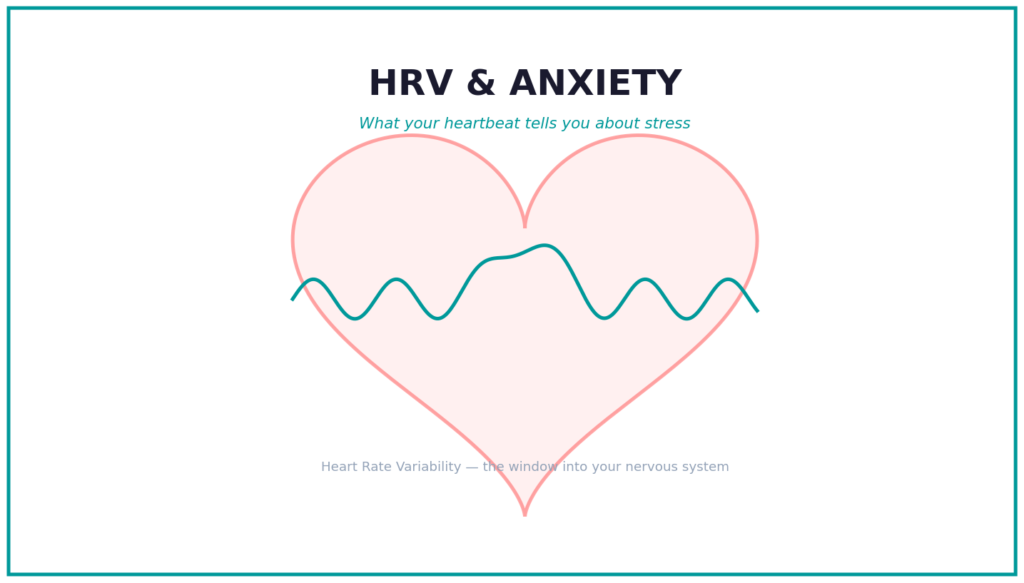
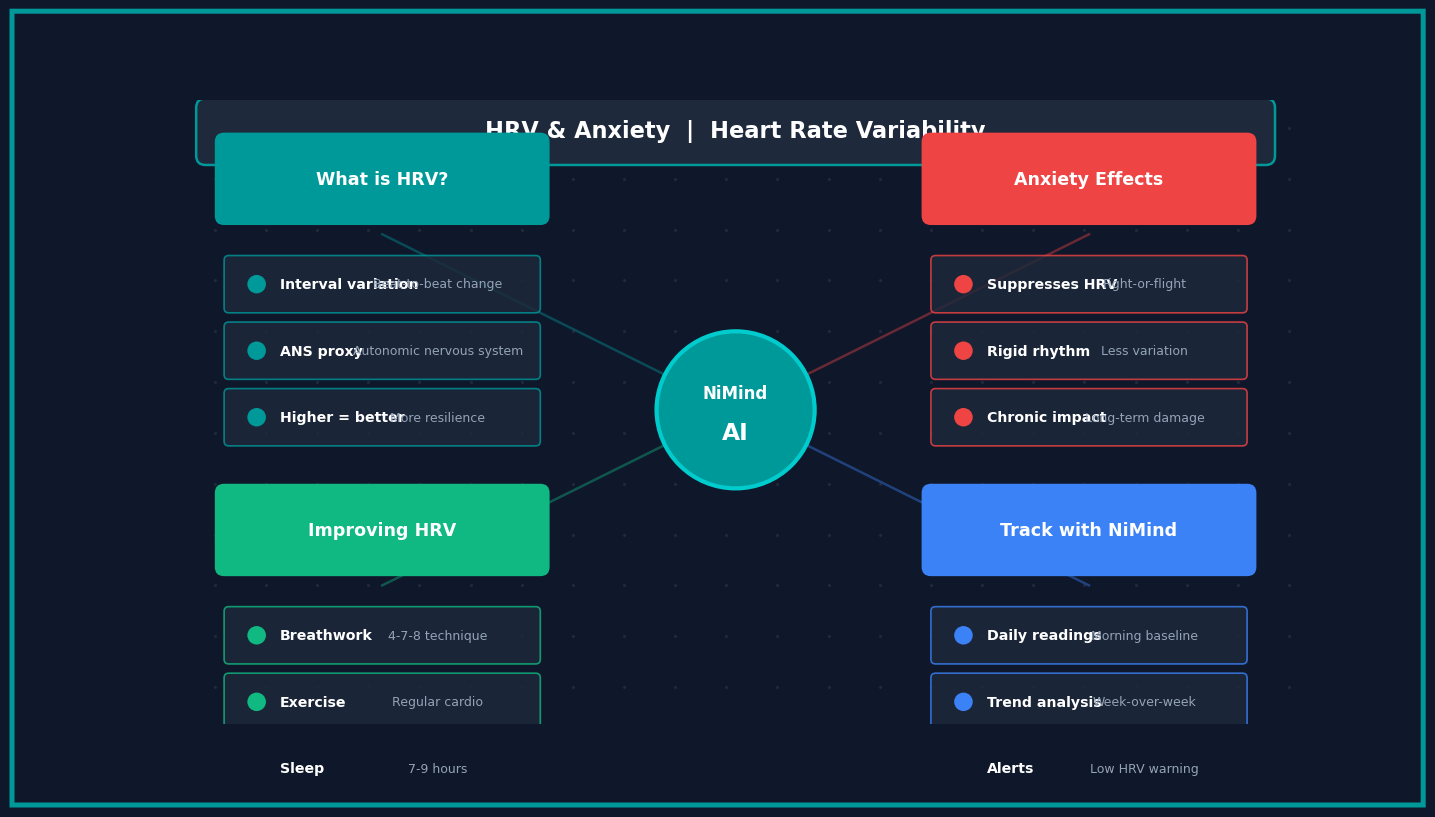
Heart rate variability measures the millisecond-level variations between successive heartbeats. These variations are governed by the autonomic nervous system — specifically the interplay between the sympathetic (fight-or-flight) and parasympathetic (rest-and-digest) branches. When you are calm, rested, and psychologically safe, parasympathetic activity dominates and heart rate variability is high: your heart is flexible and responsive to the demands of the moment.
Anxiety disrupts this balance. Chronic anxiety maintains the sympathetic nervous system in a state of elevated activation, suppressing parasympathetic input to the heart and reducing HRV. This is why HRV is used as both a diagnostic marker and a treatment outcome measure in anxiety research — it provides an objective window into nervous system regulation that self-report instruments can’t match.
“Low HRV is the autonomic nervous system’s distress signal. It tells you the body is in a state of defence rather than restoration — and if you’re anxious, it tells you your nervous system already knows it, even if your conscious mind hasn’t caught up.”
What Low HRV Means for Your Stress Levels
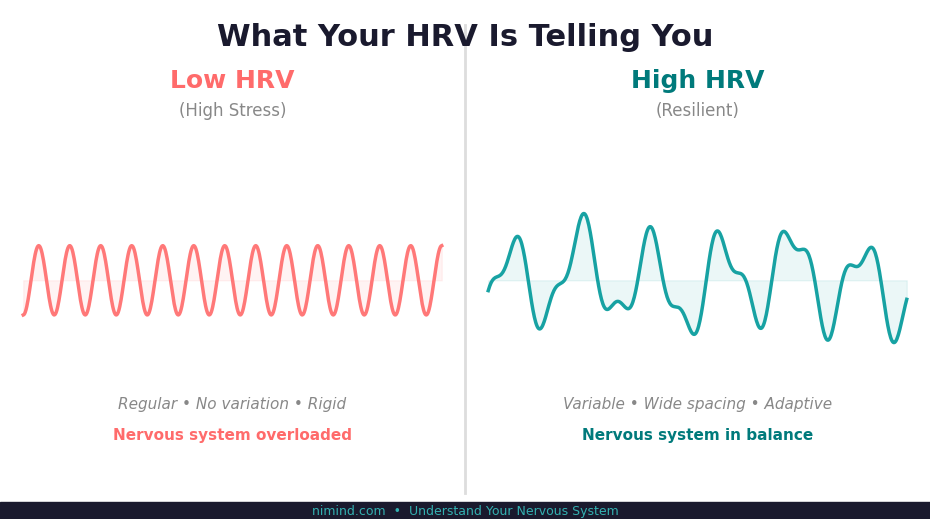
Research consistently shows that individuals with anxiety disorders have significantly lower resting HRV than controls, even when not in an active anxiety state. This reduced baseline HRV reflects a chronic shift toward sympathetic dominance — the nervous system is perpetually prepared for threat, even in the absence of objective danger.
The relationship works bidirectionally. Chronic stress reduces HRV, and low HRV makes it harder to regulate emotions effectively. This creates a feedback loop: anxiety reduces HRV, which impairs the nervous system’s capacity for emotional regulation, which makes anxiety episodes more intense and more difficult to exit. Understanding this loop is the first step toward interrupting it.
HRV benchmarks and what they mean
- RMSSD below 20ms: Associated with poor stress recovery, high allostatic load, and elevated anxiety risk
- RMSSD 20–50ms: Moderate autonomic regulation; typical range for adults under moderate life stress
- RMSSD above 50ms: Strong parasympathetic activity; associated with good emotional regulation and stress resilience
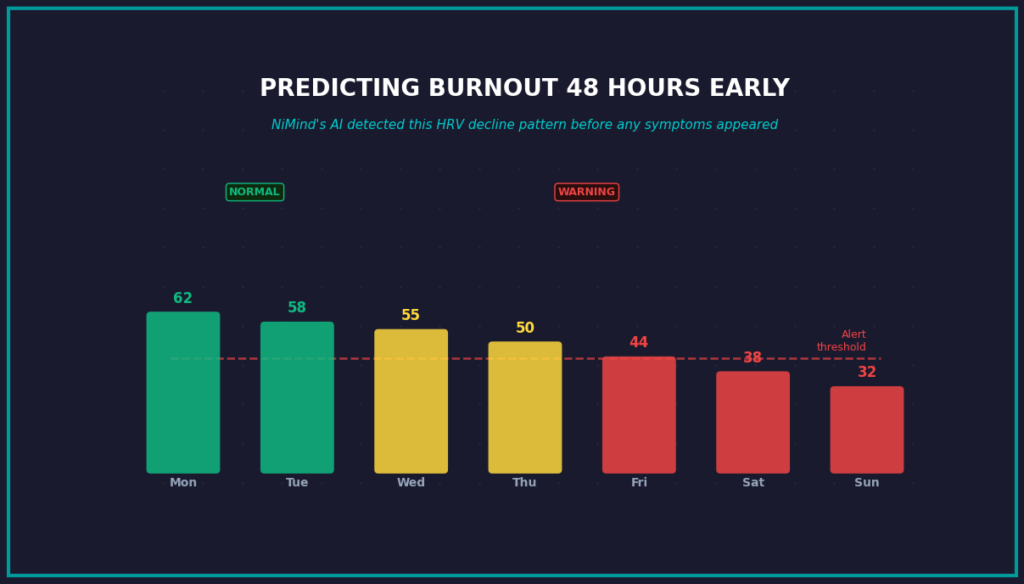
- Declining trend over weeks: One of the most reliable early signals of accumulating stress or burnout, regardless of absolute values
How HRV Changes During Anxiety Episodes
Acute anxiety episodes produce a sharp, measurable HRV drop as sympathetic activation surges. Research using ambulatory HRV monitoring in anxiety disorder patients has shown that panic attacks, social anxiety responses, and generalised worry periods all produce detectable HRV suppression that precedes the subjective experience of anxiety — sometimes by several minutes.
This predictive capacity is particularly valuable. Apps that monitor HRV continuously can, in principle, alert you to an impending anxiety escalation before you consciously feel it, creating a window of opportunity to apply regulatory strategies: paced breathing, grounding techniques, or simply removing yourself from a stressful environment.
Using HRV Data to Manage Anxiety More Effectively
HRV biofeedback is one of the most evidence-supported non-pharmacological interventions for anxiety. The principle is simple: by monitoring your HRV in real time and practising slow, controlled breathing (typically 5–6 breaths per minute, which resonates with the baroreceptor reflex and maximises HRV), you can deliberately train your autonomic nervous system toward greater parasympathetic tone.
Multiple randomised controlled trials have shown HRV biofeedback reduces anxiety symptoms in generalised anxiety disorder, social anxiety disorder, and post-traumatic stress disorder. The effects are durable, with studies showing maintained improvements at 3 and 6-month follow-up. And crucially, you don’t need expensive equipment — a smartphone with HRV monitoring capability is sufficient for most training protocols.
The Bottom Line
HRV is one of the clearest physiological windows into your anxiety and stress state. Tracking it over time reveals patterns that self-report alone will never capture — and the data can directly inform how and when you apply anxiety management strategies. Whether you’re managing clinical anxiety or simply navigating a high-stress period, HRV monitoring belongs in your mental wellness toolkit.
Monitor Your HRV and Anxiety Passively
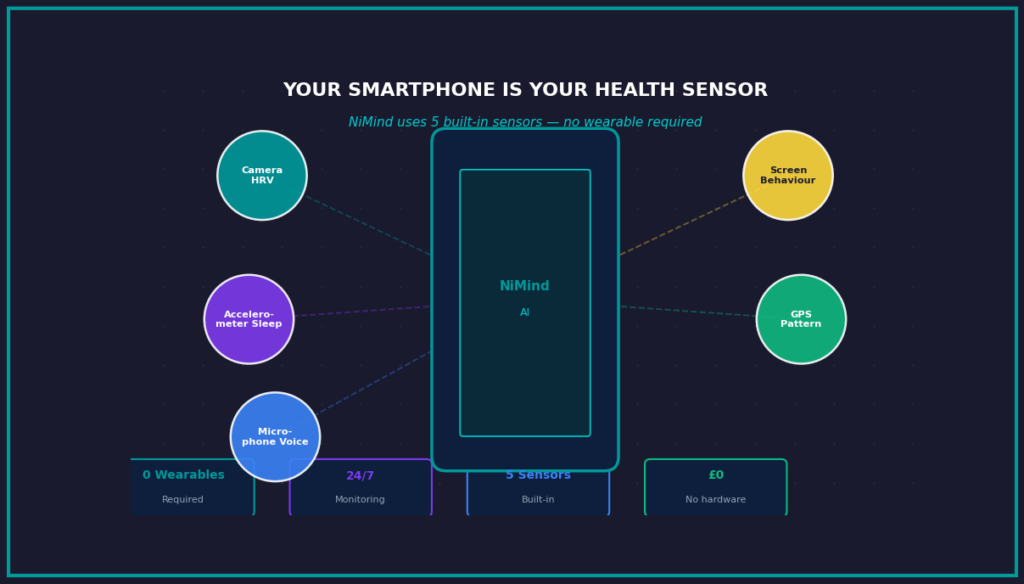
NiMind tracks HRV, stress signals, and mood using just your smartphone — no wearable required. Understand your anxiety before it peaks.
- What Is Passive HRV Monitoring — And Why It Beats Wearables
- Stress Prediction with AI: How NiMind Detects Burnout Before You Feel It
Related reading: What is HRV? A plain-English guide · Passive HRV monitoring vs. wearables