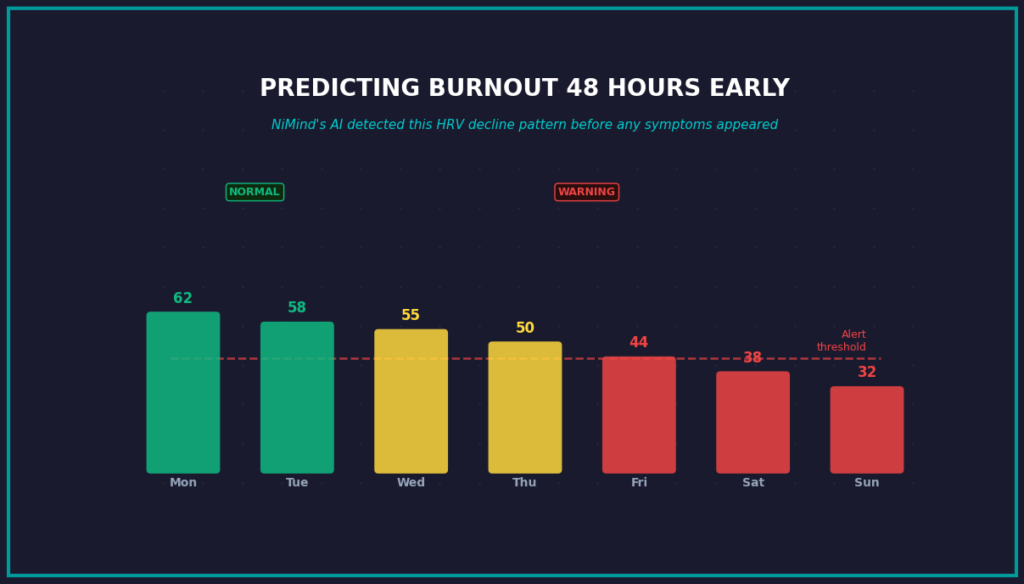
Your voice changes when you’re stressed. Not just in what you say, but in the acoustic properties of how you say it — subtle variations in pitch, energy, rhythm, and tremor that are invisible to the naked ear but detectable by machine learning algorithms with startling accuracy. Voice biomarker research is now one of the most active frontiers in digital mental health, with implications for everything from burnout detection to PTSD monitoring.
In this article
- What voice biomarkers are and how they work
- What stress does to your voice acoustically
- The clinical evidence for voice-based mental health monitoring
- How voice biomarkers are being used in apps today
What Voice Biomarkers Are and How They Work
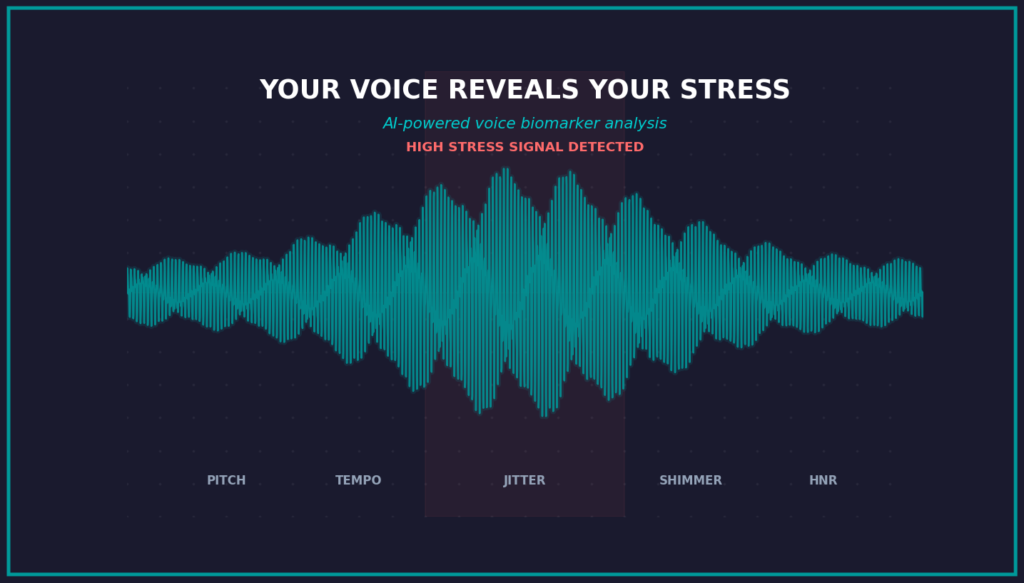
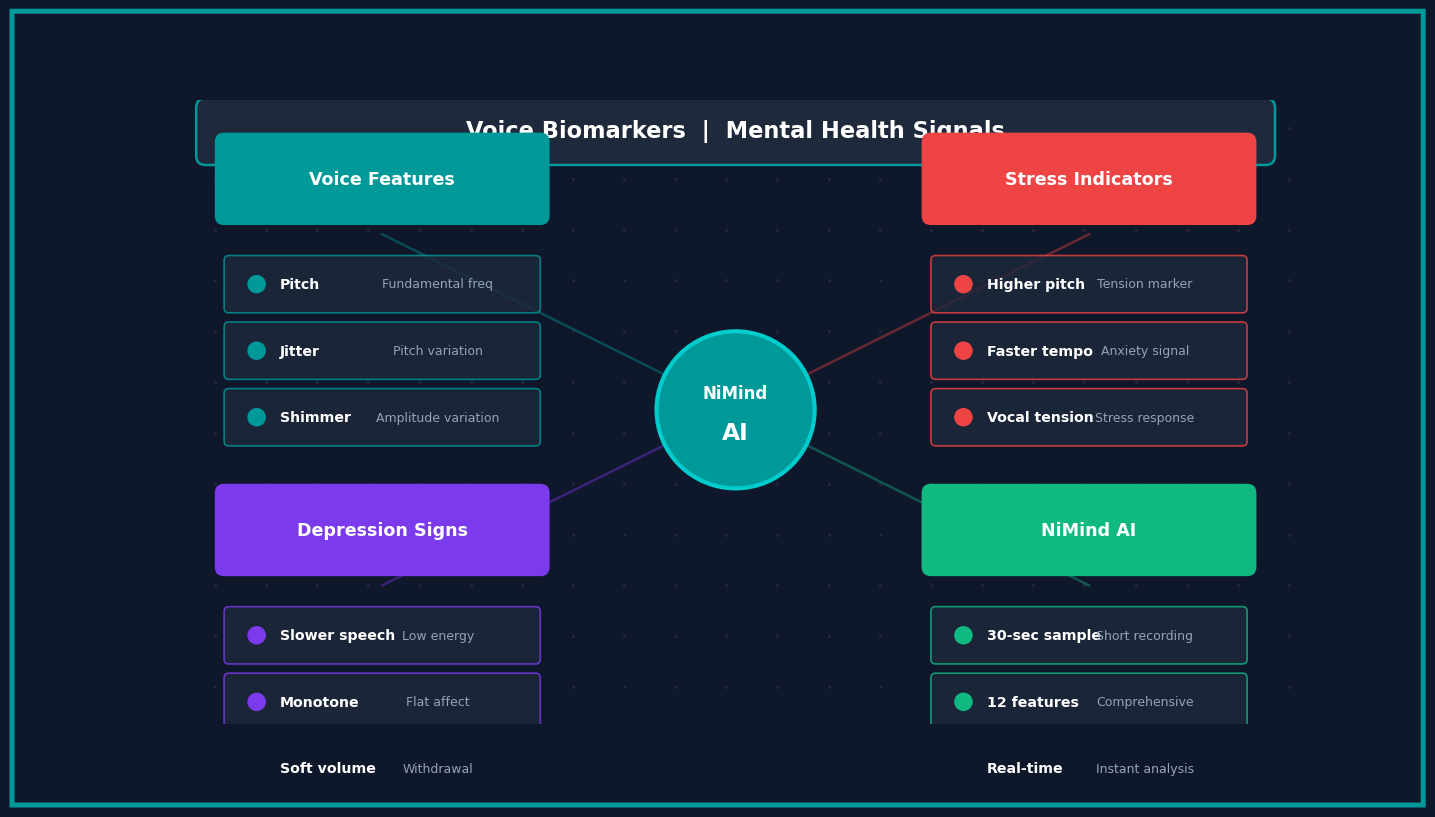
Voice biomarkers are measurable acoustic features of speech that correlate with physiological or psychological states. Unlike linguistic analysis (which examines the content of what you say), voice biomarker research focuses on the physical properties of the audio signal: fundamental frequency (pitch), jitter (pitch variation cycle to cycle), shimmer (amplitude variation), harmonics-to-noise ratio, speech rate, pause duration, and spectral features that reflect vocal tract configuration and muscle tension.
These signals are extracted using signal processing algorithms and fed into machine learning models trained on datasets of speech recordings paired with validated psychological assessments. The models learn which acoustic patterns cluster with which mental states — and can then apply those patterns to new recordings with no ground truth label.
“Voice is the richest non-invasive biosignal we have. A single 30-second recording contains more physiological information than most wearable sensors collect in an hour.” — Dr. Charles Marmar, NYU Langone PTSD Research Program
What Stress Does to Your Voice Acoustically
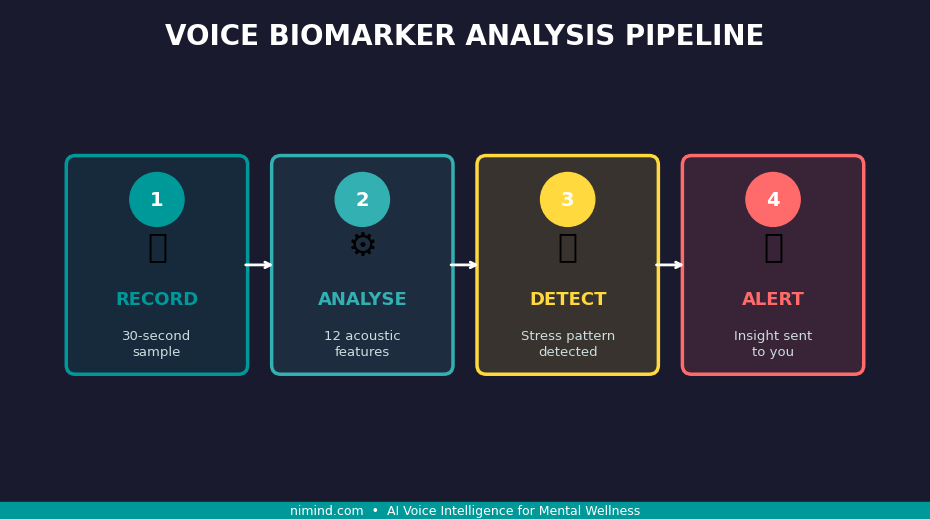
The autonomic nervous system changes vocal fold tension, respiratory pattern, and laryngeal muscle configuration in response to acute and chronic stress. These physical changes produce measurable acoustic signatures. Under acute stress, fundamental frequency (pitch) tends to rise, speech rate increases, pauses become shorter, and the voice becomes more tense with higher shimmer values. Chronic stress and burnout produce a different pattern: pitch variability decreases, speech slows, energy drops, and prosodic range narrows — what researchers describe as a “flattened” vocal profile.
Key acoustic features linked to stress
- Jitter and shimmer: Micro-variations in pitch and amplitude that increase with vocal tension under stress
- Harmonics-to-noise ratio: Decreases when the voice becomes breathier or more tense under psychological load
- Speech rate: Tends to increase under acute stress and decrease with chronic fatigue or depression
- Pause frequency: More frequent pauses may indicate cognitive load, depression, or emotional suppression
- Fundamental frequency range: Narrows with depression and burnout; widens with anxiety and acute stress
The Clinical Evidence for Voice-Based Mental Health Monitoring
The research base is compelling. A 2019 systematic review in Schizophrenia Research identified consistent vocal markers of psychiatric conditions across multiple independent datasets. Studies from DARPA-funded military research have shown that voice biomarkers can detect PTSD with accuracy exceeding 89% in some cohorts. Research on depression has consistently identified lower pitch, reduced variability, and longer pauses as reliable acoustic markers.
For stress specifically, studies using ecological momentary assessment — where participants rate their stress multiple times per day — have found that voice recordings collected in real-world conditions (not lab settings) can predict reported stress levels with correlations of 0.6–0.8, which is clinically significant for monitoring purposes.
How Voice Biomarkers Are Being Used in Apps Today
Consumer-facing voice biomarker applications are moving from research labs to smartphones. The approach typically involves short daily voice recordings — reading a standardised passage, describing how you’re feeling, or responding to a prompt — that are processed on-device or via secure cloud analysis. Longitudinal tracking of your personal voice baseline enables the detection of deviations that may signal worsening stress, mood change, or the early signs of burnout.
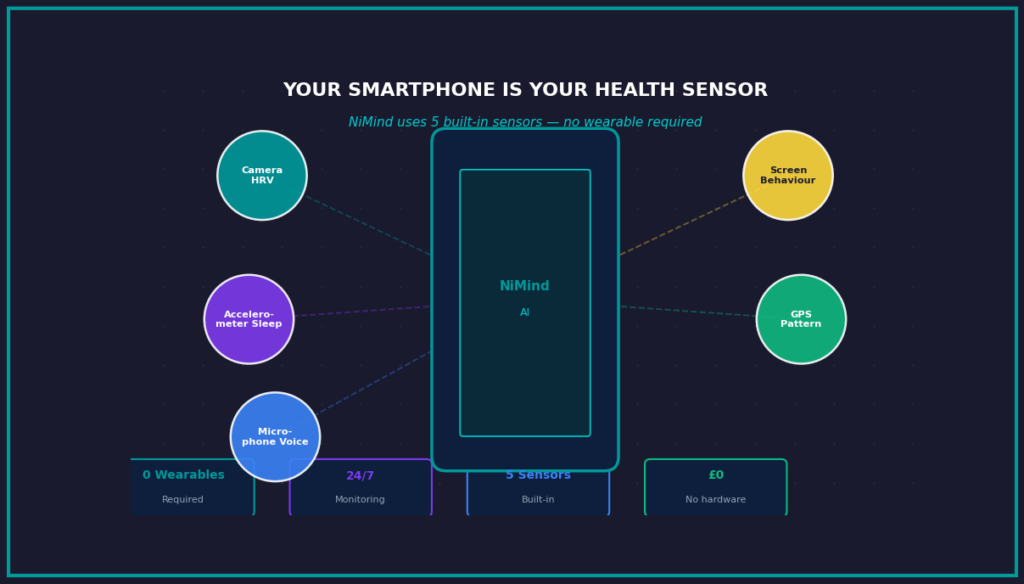
NiMind incorporates voice biomarker analysis as one of several passive monitoring streams, creating a multi-signal picture of mental wellness that is more robust than any single measure alone. A brief morning check-in recording — as short as 20 seconds — is enough to extract meaningful acoustic features that contribute to your daily wellness score.
The Bottom Line
Voice biomarkers represent one of the most scientifically grounded and practically accessible tools in digital mental health. Your voice already contains rich information about your stress and emotional state — technology is simply making that information legible. As the evidence base matures and on-device processing improves, voice analysis will become a standard component of passive mental wellness monitoring.
Discover What Your Voice Reveals About Your Stress
NiMind analyses voice biomarkers alongside HRV, sleep, and behaviour to build your complete mental wellness picture. No wearable needed. Free.
- Digital Phenotyping: How Your Phone Knows Your Mental State Before You Do
- How AI Is Transforming Mental Health Support in 2025
Related reading: Stress prediction with AI: detecting burnout early · How your phone knows your mental state