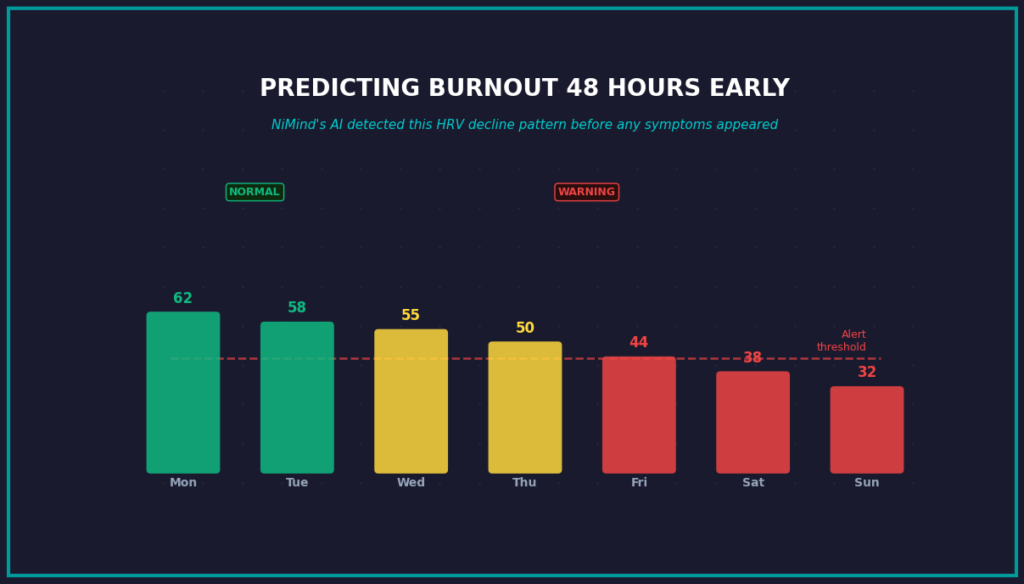
Your smartphone might understand your mental state better than you do — and it’s doing so right now, silently, using a technique researchers call digital phenotyping. Studies from Harvard Medical School and MIT have shown that passively collected phone data can predict depression onset, anxiety episodes, and stress surges days before the individual notices anything is wrong. This isn’t science fiction. It’s already happening.
In this article
- What digital phenotyping means
- The signals your phone collects passively
- What the research says about mental health prediction
- Privacy, ethics, and how to use it responsibly
What Digital Phenotyping Actually Means
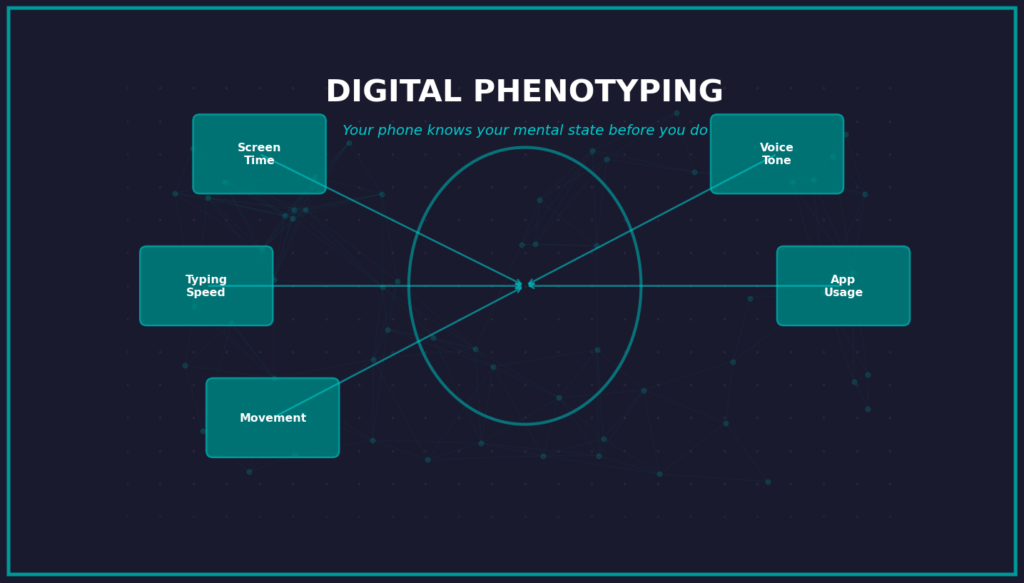
Digital phenotyping is the moment-by-moment quantification of the individual-level human phenotype using data from personal digital devices. In plain English: your phone’s sensors, usage patterns, and interaction logs create a detailed, dynamic portrait of your mental and physical state — one that updates continuously and reflects real-world behaviour rather than self-reported data.
The term was coined by researchers at Harvard’s Onnela Lab, who have spent over a decade developing frameworks for transforming raw smartphone data into clinically meaningful mental health signals. The key insight is that mental health conditions change behaviour — and behaviour leaves digital traces.
“We carry our mental health with us everywhere our phones go. The data already exists. The question is whether we use it to help people or ignore it.” — Dr. Jukka-Pekka Onnela, Harvard T.H. Chan School of Public Health
The Signals Your Phone Collects Passively
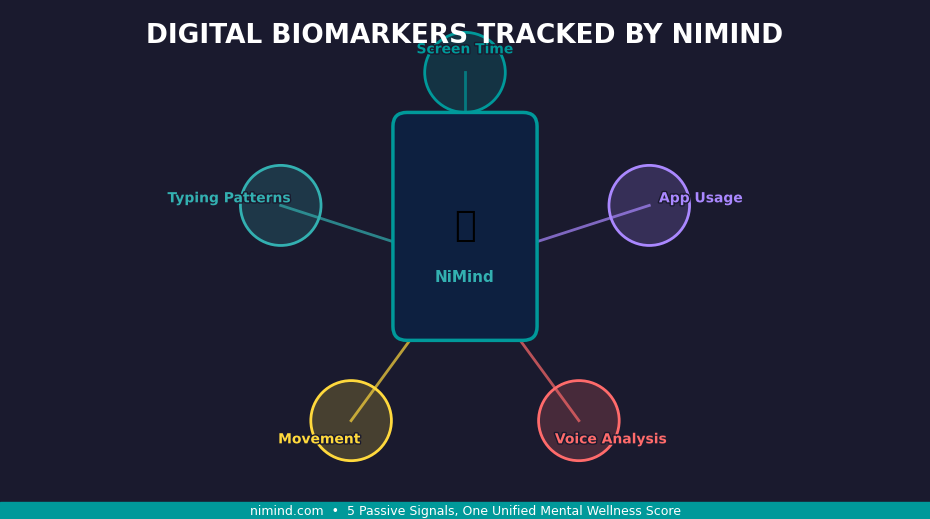
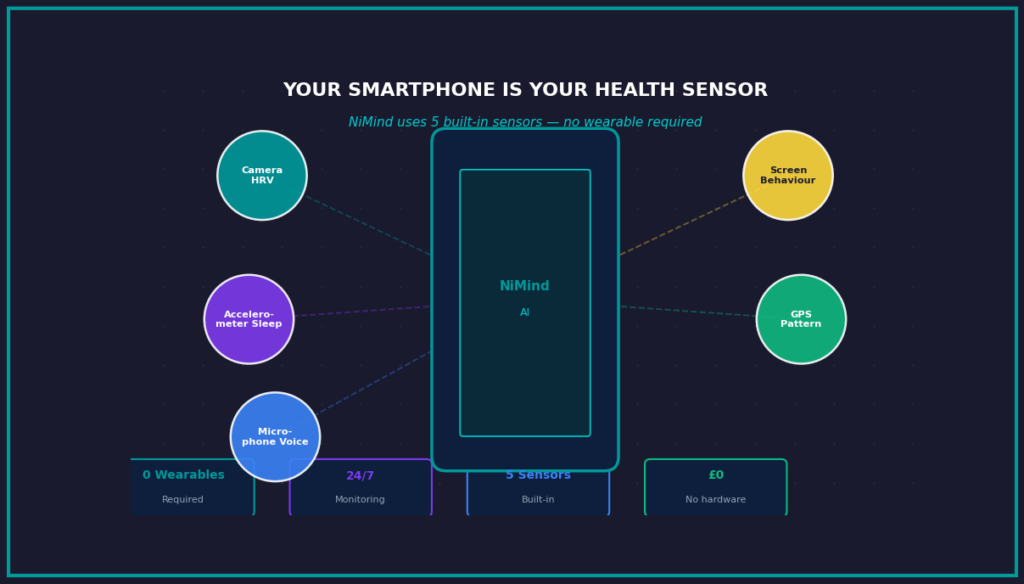
Digital phenotyping draws on a surprisingly rich array of data streams, all of which are available on standard smartphones without any additional hardware.
Behavioural and sensor signals
- GPS mobility patterns: How far you travel, how often you leave home, whether your radius is shrinking (a known predictor of depression)
- Screen time and app usage: Duration, session frequency, and which apps you use — social media avoidance is a key depression signal
- Sleep timing: When you pick up your phone, when you put it down, and how fragmented your nights are
- Typing cadence: Speed, error rate, and pauses in typing correlate with cognitive load and mood state
- Call and message patterns: Social withdrawal is measurable through declining communication frequency
- Accelerometer data: Physical activity levels and movement patterns provide direct physiological context
What the Research Says About Mental Health Prediction
The evidence base for digital phenotyping is growing rapidly. A landmark 2018 study in npj Digital Medicine demonstrated that passively collected smartphone data predicted PHQ-9 depression scores with high accuracy, outperforming self-report instruments in some cases. A 2021 study in JMIR Mental Health found that GPS-based mobility features alone could distinguish between depressive and non-depressive periods with 80% accuracy.
More recent work has extended these findings to anxiety, bipolar disorder, schizophrenia relapse, and even early-stage cognitive decline. The signal isn’t perfect — individual variation is significant, and context always matters — but the consistent finding is that digital phenotyping provides an objective, continuous window into mental state that complements and often outperforms periodic clinical assessments.
Privacy, Ethics, and How to Use It Responsibly
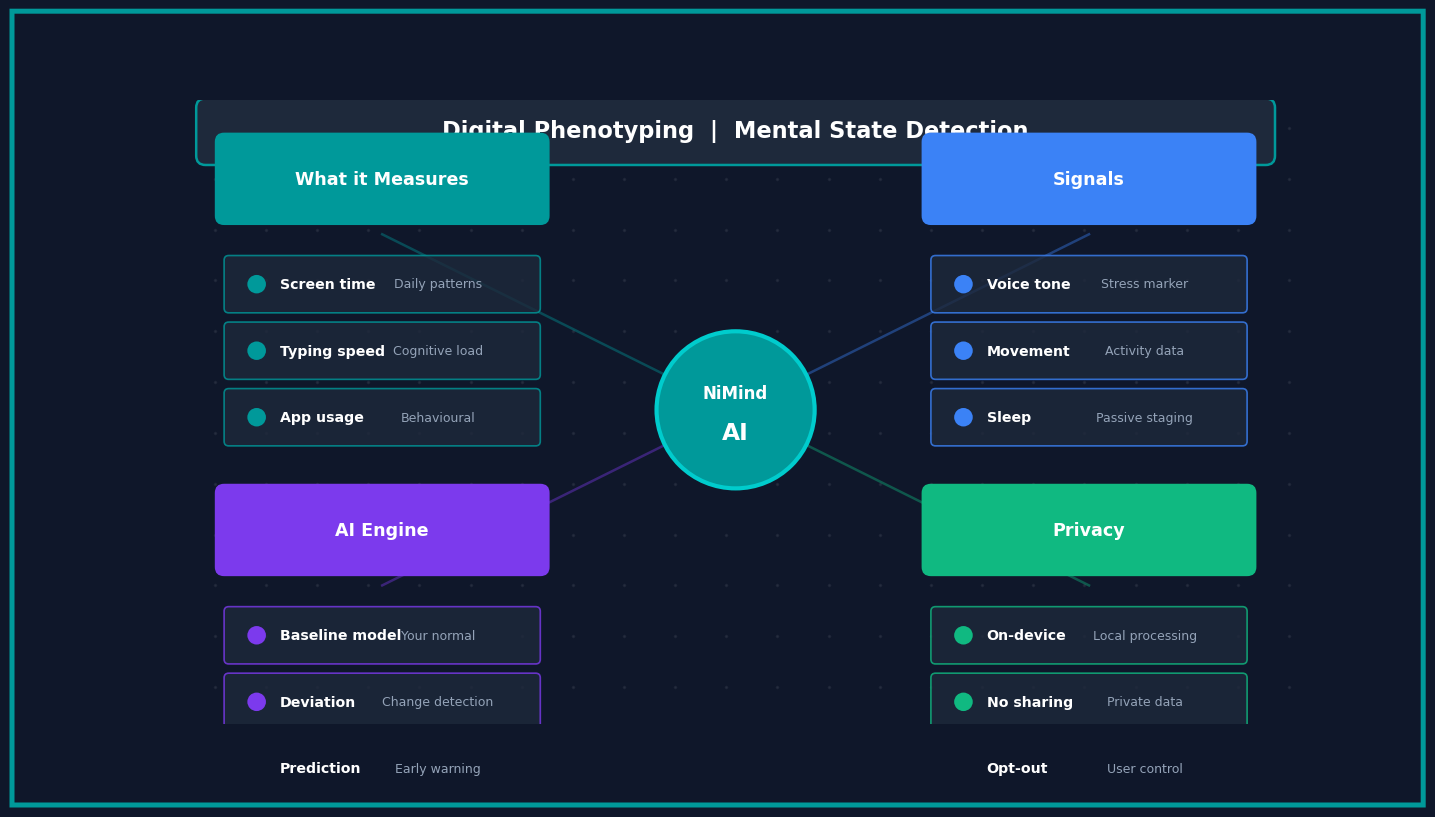
The power of digital phenotyping raises legitimate privacy concerns. Continuous passive monitoring means continuous data collection — and that data, in the wrong hands, could be highly sensitive. Responsible implementation requires on-device processing (data never leaves your phone), explicit informed consent, transparency about what is being collected, and user-controlled data deletion.
NiMind’s approach processes all passive signals on-device using private machine learning models. No raw sensor data is transmitted to servers. Users see exactly what signals are being analysed and retain full control. The goal is to put this powerful technology in the hands of individuals — not institutions — so that you benefit from your own data.
The Bottom Line
Digital phenotyping is quietly transforming mental health monitoring. Your smartphone already knows more about your mental state than you might realise — the question is whether that knowledge is being used to help you. With the right privacy-first platform, these passive signals become a powerful early-warning system for stress, burnout, and mood shifts, delivered without surveys, wearables, or clinical appointments.
Let Your Phone Monitor Your Mental Wellness
NiMind uses privacy-first digital phenotyping to track stress, mood, and burnout signals — passively, from your smartphone. No wearable. No surveys. Free.
- What Is Passive HRV Monitoring — And Why It Beats Wearables
- How AI Is Transforming Mental Health Support in 2025
Related reading: Digital phenotyping & daily habits: a guide to passive noticing · What is HRV? A plain-English guide