Everyone knows a good morning routine matters. But what does the data actually say about which morning habits have the most measurable impact on mental wellness — and which are just wellness industry theatre? Research combining physiological monitoring, behavioural science, and longitudinal cohort studies is beginning to answer this question with surprising precision.
In this article
- Why mornings have an outsized impact on mental wellness
- What the data says about the most effective morning habits
- The morning HRV window — and why it matters
- Building a data-informed morning routine
Why Mornings Have an Outsized Impact on Mental Wellness
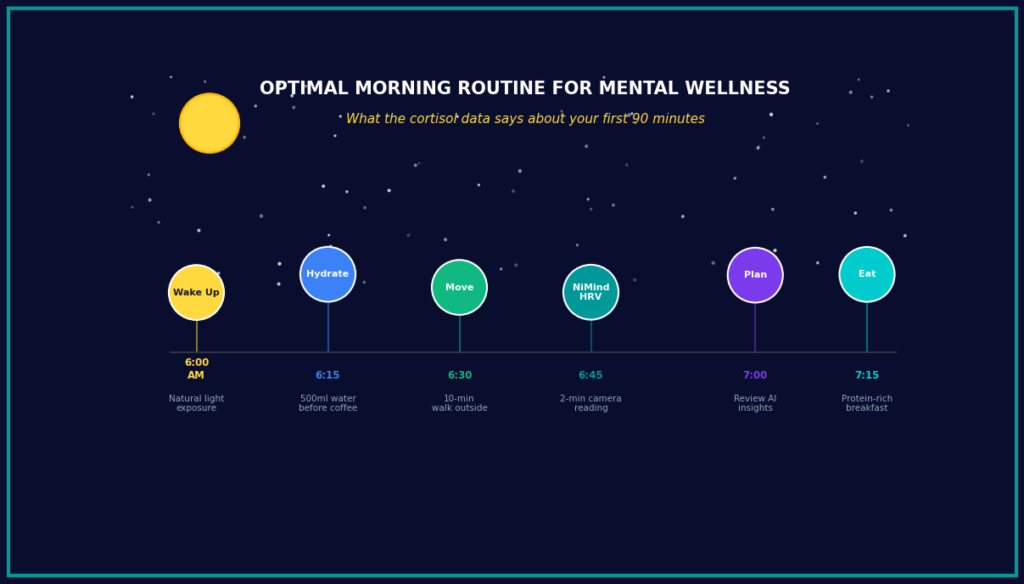
The first 90 minutes after waking represent a critical biological window. Cortisol — the body’s primary stress hormone — peaks during what researchers call the cortisol awakening response (CAR), which occurs 30–45 minutes after waking and sets the autonomic tone for the rest of the day. How you respond to and interact with this window has measurable downstream effects on HRV, mood regulation, cognitive performance, and stress resilience throughout the following 12–16 hours.
Research in psychoneuroendocrinology has shown that the magnitude and shape of the CAR predicts same-day stress reactivity, working memory performance, and evening mood state. Blunted CAR — often caused by sleep deprivation, chronic stress, or poor sleep quality — is associated with elevated burnout risk. A healthy, well-shaped CAR is a physiological marker of good recovery and resilience.
“What you do in the first hour of the day doesn’t just affect your mood — it sets your autonomic nervous system’s operating parameters for the next 12 hours. The data on this is surprisingly clear.”
What the Data Says About the Most Effective Morning Habits
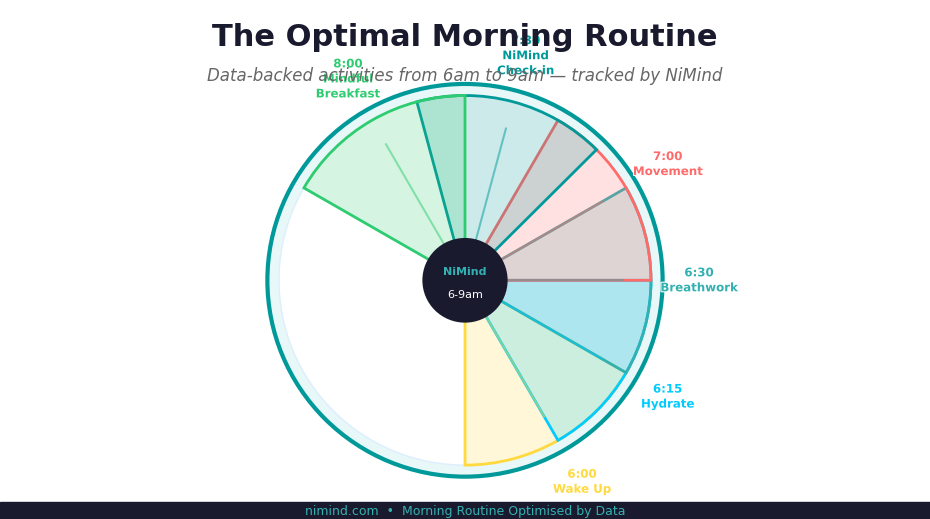
Research across multiple disciplines converges on a small set of morning practices with meaningful evidence for mental wellness outcomes. These are not the habits most heavily marketed in wellness culture — the cold plunges, elaborate supplement stacks, and two-hour journalling sessions — but the habits with consistent, replicable effects across multiple independent studies.
Evidence-backed morning practices
- Delay phone checking by 30+ minutes: Immediate morning smartphone use elevates cortisol beyond the normal CAR peak and increases perceived stress. Studies show a 30-minute delay significantly reduces morning anxiety and improves day-start mood ratings.
- Natural light exposure within 30 minutes: Morning light exposure synchronises the circadian clock, improves evening melatonin secretion, and is one of the most evidence-supported interventions for seasonal depression and general mood regulation.
- Movement within the first hour: Even 10 minutes of moderate movement (a walk, light yoga, or stretching) produces measurable HRV improvements and reduces cortisol response to subsequent stressors throughout the day.
- Consistent wake time: Social jet lag — varying wake time by more than 60–90 minutes between weekdays and weekends — is independently associated with higher depression risk, poorer metabolic health, and lower subjective wellbeing.
- Brief mindfulness or breathing practice: 5–10 minutes of paced breathing (5 breaths per minute) in the morning produces measurable HRV improvements and is one of the most effective short-duration stress-reduction interventions with robust evidence.
The Morning HRV Window — and Why It Matters
Heart rate variability measured in the morning — ideally within 30 minutes of waking, before eating or significant movement — provides the most stable and informative HRV reading of the day. Morning HRV reflects the quality of overnight autonomic recovery and is the best single daily predictor of how well your nervous system is resourced to handle that day’s stressors.
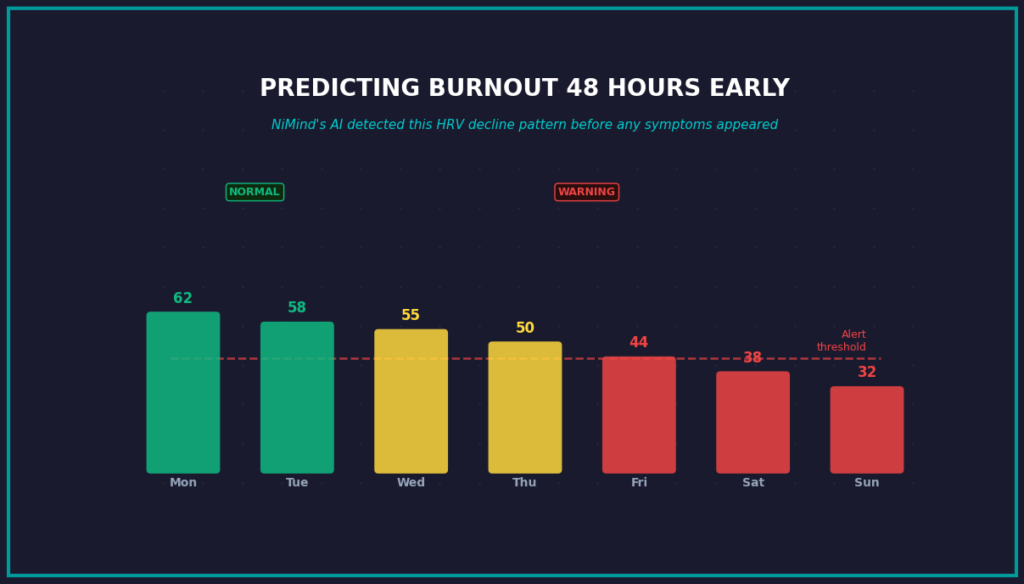
Athletes have used morning HRV readiness scores for years; the same principle applies to mental wellness. A declining morning HRV trend over consecutive days is one of the earliest physiological signals of stress accumulation and should prompt load reduction or enhanced recovery practices.
Building a Data-Informed Morning Routine
The most effective approach is to start with baseline monitoring before adding interventions. Spend two weeks simply recording your morning HRV and mood state with a brief passive check-in. This establishes your personal baseline. Then introduce one habit at a time — natural light, a brief walk, delayed phone use — and monitor whether your morning HRV and mood ratings shift systematically. This personalised, data-driven approach consistently outperforms generic routines because it accounts for your individual biology rather than an average population response.
The Bottom Line
The data on morning routines for mental wellness is clearer than wellness culture often suggests. A small set of evidence-backed habits — consistent wake time, morning light, brief movement, delayed phone use, and paced breathing — produce reliable physiological improvements. The key is personalising these practices with objective data so you know what actually moves the needle for your biology, not just in theory.
Track Your Morning Wellness Routine with Real Data
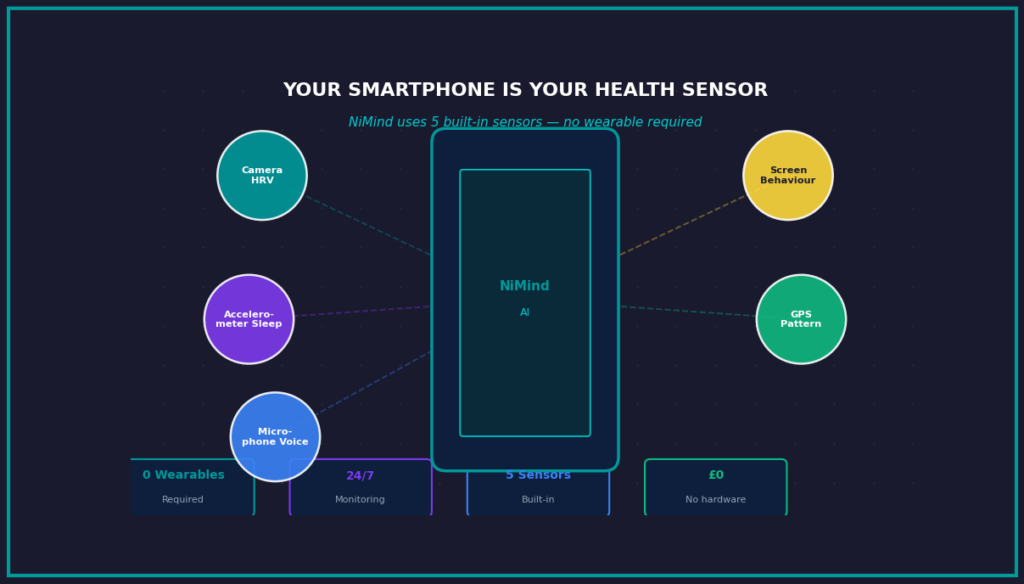
NiMind monitors your HRV, sleep quality, and morning wellness passively — so you know what your morning routine is actually doing to your body. Free to try.
- What Is Passive HRV Monitoring — And Why It Beats Wearables
- Digital Wellbeing for Busy Professionals: 5 Passive Habits That Actually Work
Related reading: Digital wellbeing for busy professionals · HRV and anxiety